Category Archives: News

The publication “Heritage Futures” is shortlisted for the EAA Book Prize 2023

The EAA (European Association of Archaeologists) annually awards the EAA Book Prize to honour recent publications by EAA Members. By the 28 February 2023 deadline, we received altogether 49 nominations. The Book Prize selection committee shortlisted ten publications, which the committee will further evaluate. The winning title will be announced at the Opening Ceremony of the 29th EAA Annual Meeting in Belfast, Northern Ireland.
The publication “Heritage Futures” is shortlisted for the EAA Book Prize 2023: Website of the EAA Book Prize 2023.

Heritage Futures: Comparative Approaches to Natural and Cultural Heritage Practices
by Rodney Harrison, Caitlin DeSilvey, Cornelius Holtorf, Sharon Macdonald, Nadia Bartolini, Esther Breithoff, Harald Fredheim, Antony Lyons, Sarah May, Jennie Morgan, and Sefryn Penrose.
UCL Press 2020, Open Access.
For further information and to freely download the publication, please visit the UCL Press website.
Magdalena Buchczyk: Weaving Europe, Crafting the Museum

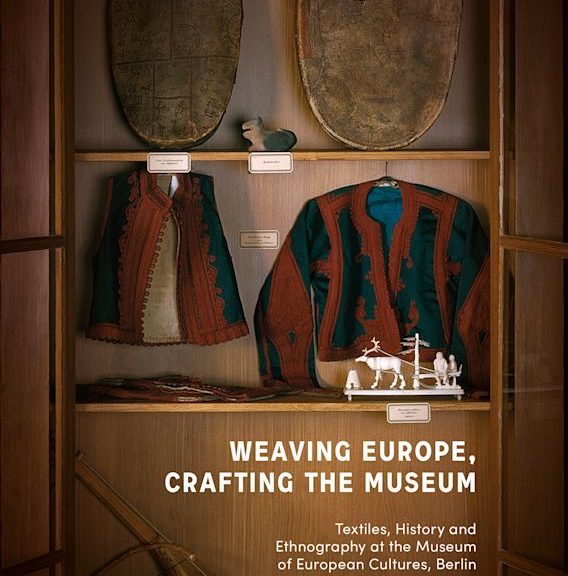
The new book offers fresh insights into the little-known collection of the Museum Europäischer Kulturen (Museum of European Cultures, MEK) in Berlin. Buchczyk’s monograph Weaving Europe, Crafting the Museum delves into the history and the changing material culture in Europe through the stories of a basket, a carpet, a waistcoat, a uniform, and a dress. The focus on the objects from the MEK offers an innovative and challenging way of understanding textile culture and museums. The book shows that textiles can be simultaneously used as the material object of research, and as a lens through which we can view museums. In doing so, the book fills a major gap by placing textile knowledge back into the museum.

Each chapter focuses on one object story and can be read individually. Swooping from 19th-century wax figure cabinets, Nazi-era collections, Cold War exhibitions in East and West Berlin, and institutional reshuffling after German unification, it reveals the dramatically changing story of the museum and its collection. Based on research with museum curators, makers and users of the textiles in Italy and Germany, Poland and Romania, the book provides intimate insights into how objects are mobilised to very different social and political effects. It sheds new light on movements across borders, political uses of textiles by fascist and communist regimes, the objects’ fall into oblivion, as well as their heritage and tourist afterlives. Addressing this complex museum legacy, the book suggests new pathways to prefigure the future.


About the author: Magdalena Buchczyk is a Junior Professor in Social Anthropology of Cultural Expressions at the Humboldt-Universität zu Berlin. She conducts ethnographic research on collections, material culture and intangible heritage. 

Viktoria Tkaczyk: Thinking with Sound – A New Program in the Sciences and Humanities around 1900

Viktoria Tkaczyk is Professor of Media and Knowledge in the Department of Media Studies at Humboldt-Universität zu Berlin.

Thinking with Sound undertakes a historicisation of auditory neuroscience, an interdisciplinary field of research that is currently expanding rapidly. The book traces how the identification of the auditory cortex in the neuroanatomy of the 1860s inspired very different disciplines to new theories of a “thinking in sound images”.

Ferdinand de Saussure interpreted the “acoustic image” as the key to human language, Sigmund Freud approached the human psyche via the auditory unconscious, for Henri Bergson imaginary sounds proved the independence of the mind from physical perception, Ernst Mach declared comparative listening to be the central method of experimental physics, Carl Stumpf started from culturally shaped ideas of sound and used them for comparative cultural studies.

In its various forms, the topos of “thinking in sound images” connected an academic landscape at the turn of the 20th century that split into increasingly specialised fields of research. In the process, disciplines in the humanities and natural sciences exerted a literally disciplining influence on the ways of speaking, listening and thinking of their time – supported by numerous new media technologies, but also closely linked to colonial, imperial and national political programmes.

Further information about the publication.

InHerit: Call for fellows now open!

The new Käte Hamburger Centre for Advanced Study inHerit. Heritage in Transformation, based at the Humboldt-Universität zu Berlin, invites applications from both experienced and early career post-doc researchers for fellowships to begin in 2024. The application deadline is 12 May 2023.

Applications should address questions of heritage in transformation in relation to one or more of the Centre’s guiding themes: Decentring the West, Decentring the Human, and Transforming Value. Successful projects are likely to be based in original empirical or archival study/analysis of source material (which may have already been undertaken) or creative work, and to probe historically and socio-culturally situated notions and practices of inheritance, heritage, value and temporality – and associated key concepts – through alternatives, such as those based in non-Western, indigenous, historically marginalized or imaginative perspectives. Projects examining or creatively addressing transformations at the intersection between increasingly globally widespread practices, such as restitution, digitalization, genetic ancestry testing and legal changes, and those that address transregional experiences and practices are especially welcome.

Researchers and topics from areas currently underrepresented in heritage scholarship, including the global South and Eastern Europe, are especially encouraged to apply. We also welcome applications from artists, film-makers and curators.

For more information about the call, please see: https://inherit.hu-berlin.de/

Object of the month: An Indian Tablā (dāyāṃ) in the Berlin Lautarchiv

Object of the Month 04/2023 

In addition to its core holdings of audio recordings of prisoners of war from the First World War and the collection of German dialects from the 1920s and 1930s, the Lautarchiv (Humboldt-Universität zu Berlin) also preserves other interesting sub-collections that have so far remained rather in the background and initially seem to have no obvious connection to the collection. Take, for example, three Indian drums.

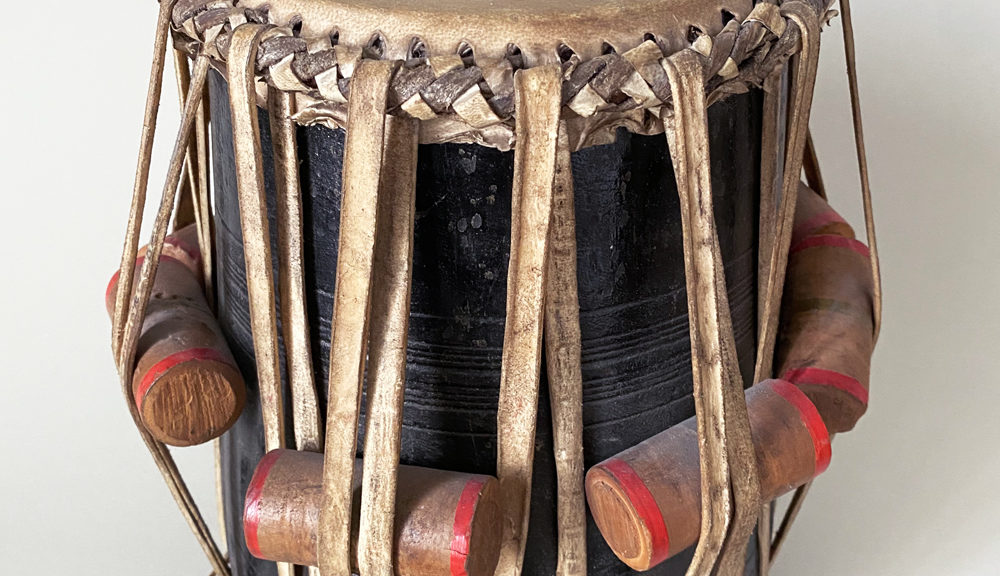
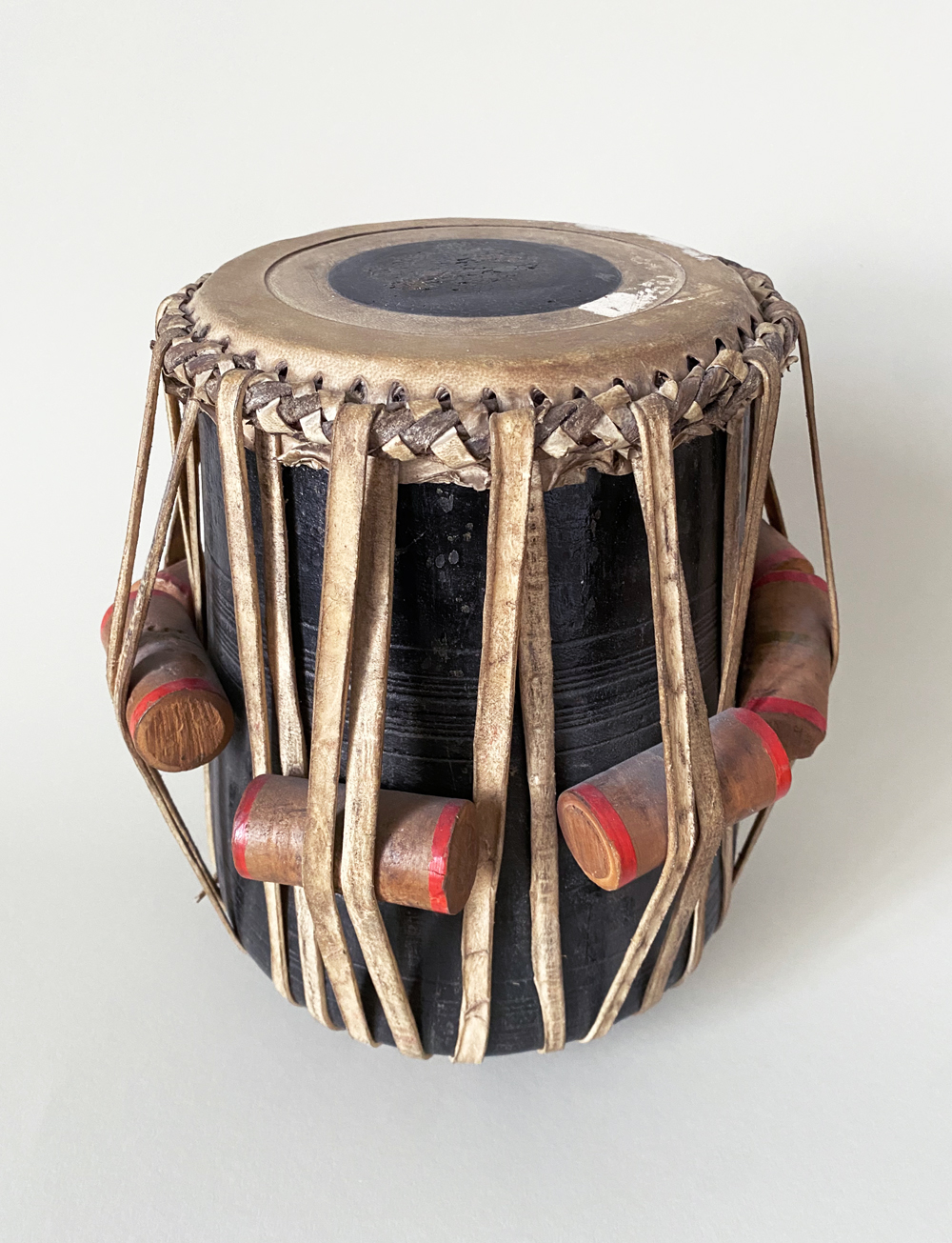
No historical written documentation exists for these instruments. There is no entry in any inventory book that would indicate how, why and from where they came into the collection of the Lautarchiv. In terms of organology, the three drums do not form a coherent ensemble. One of these drums—an Indian tablā (dāyāṃ)—will be the focus of attention here.

Tabla
An Indian tablā (dāyāṃ) in the Berlin Lautarchiv; height 29cm.
Tabla Top View
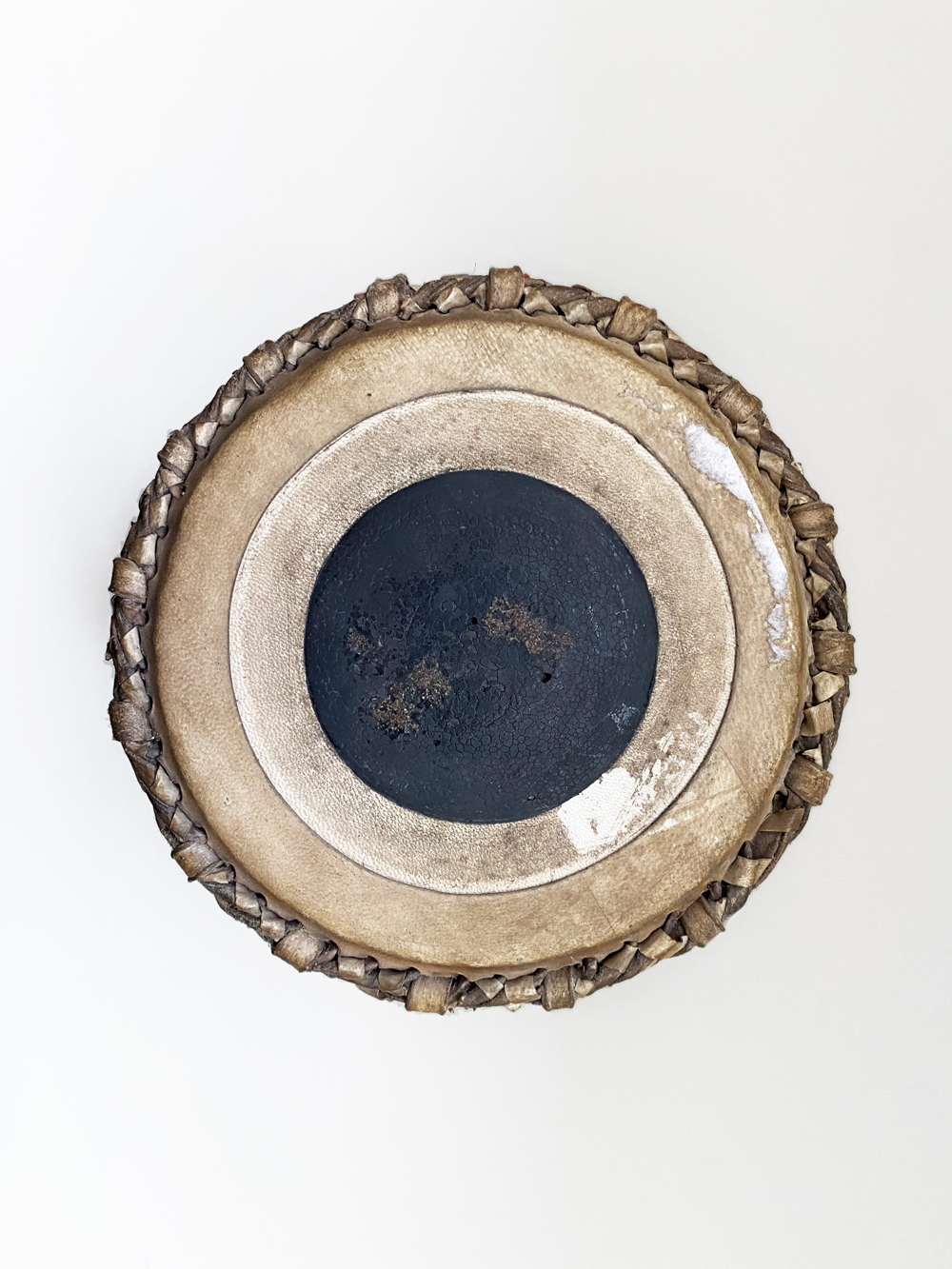
The tablā (⌀ 20cm) viewed from the top with the characteristic black tuning paste (shāī) in the middle. Note the white areas (stains from an improper application of stickers).

About the instrument

Tablā is the name for a pair of drums played with the hands, consisting of two small kettle drums. The smaller of the two drums played with the right hand is also called dāyāṃ (literally: right), which is referred to as the “real” tablā in some publications. The larger drum played with the left hand is called bāyāṃ (literally: left). There is only a dāyāṃ in the Lautarchiv; the pair of drums is incomplete. The tablā is more than a mere “object”; it demands the respect of musicians to be treated as individuals: instrument and musician become one. The drums are placed on the floor and played cross-legged. However, it is not allowed to simply step over a tablā standing on the floor; this is considered disrespectful.

Provenance: a few tentative & speculative thoughts

Some speculative lines of thought on the provenance are outlined here due to the lack of documentation:

  • Non-returned loan?
    First of all, the speculative thought suggests itself whether it could possibly be a historical loan from the Museum of Musical Instruments SIMPK or the Ethnological Museum. This can be ruled out for the MIM due to a missing catalogue number on the instrument. The same applies to the Ethnological Museum.
  • Guest gift?
    According to Dieter Mehnert, who was responsible for the collection in the 1990s, the drums had been “brought” from India before the 1960s. Further circumstances were not known. So whether it was a guest gift to the university deposited in the Lautarchiv must remain open.
  • Age of the instrument?
    Even though the instrument probably came to the Lautarchiv before 1960, this does not allow us to draw any conclusions about the age of the instrument. It could be considerably older. The age could only be reliably determined by a dendrochronological examination (a dating by means of a tree ring examination of the wood used), not by mere visual inspection.

Within the non-material context of the collection

Although no direct connection of the tablā to the other holdings of the Lautarchiv can be reconstructed, the tablā in the Lautarchiv by no means stands in a culturally isolated space. Interesting cross-references exist within the collection that lend a non-material context to the fact that there is a tablā in the Lautarchiv. Consider that the Nobel laureate Rabīndranāth Ṭhākur (রবীন্দ্রনাথ ঠাকুর,1861–1941) gave a speech and sang a song at Friedrich-Wilhelm-Universität in June 1921. This audio recording is now in the collection of the Lautarchiv (shelf mark AUT 48). Whether it might even have been a gift from Rabīndranāth Ṭhākur cannot yet be determined on the basis of current knowledge. A song sung in the Tamiḻ language (தமிழ்) by Rājamāṇikkam (born around 1902) on 28 September 1926, accompanied by tablā (shelf mark LA 733), is unfortunately among the losses of the Lautarchiv.

Symbolic power of a Tablā in the Berlin Lautarchiv

Last but not least, the tablā also stands symbolically “in the midst” of the POW recordings of Indian colonial soldiers sent by the United Kingdom against Germany in the First World War. One of the most famous cyclically repeated rhythmic structures in North Indian classical music is the so-called Teental (तीन ताल). Its rhythmically balanced structure in 16 drum syllables (bol), which in turn are subdivided into 4×4 syllables, was considered a symbolic force for peace by none other than Ravi Shankar (1920–2012). It is up to everyone to decide whether the existence of a tablā in the collection of the Lautarchiv, “in the midst” of the audio recordings of prisoners of the First World War, can also assume and unfold such a symbolic power of peace today.

Text and photos: Christopher Li, Head of Collection of Sound Archive

Object of the month: Historical drawing of a new horse stable building

Object of the Month 03/2023 

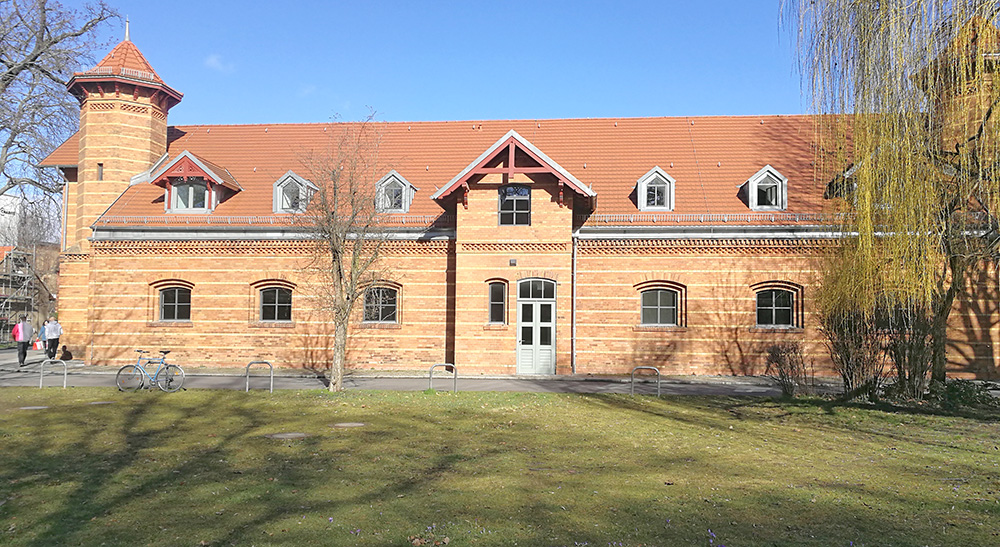
House 9 on the North Campus once served as the equine clinic of the former Prussian Royal Veterinary School, which was one of the leading training and research centres for veterinary medicine in the young German Empire. The northern part of the building was built in 1836 by Ludwig Ferdinand Hesse, the southern part in 1874 by Julius Emmerich as an extension. A drawing from the plan archive of the Technical Department provides information on the construction of the extension.
HU, Campus North, House 9
Campus North, House 9, Photo: Kerstin Hinrichs, 14 March 2023
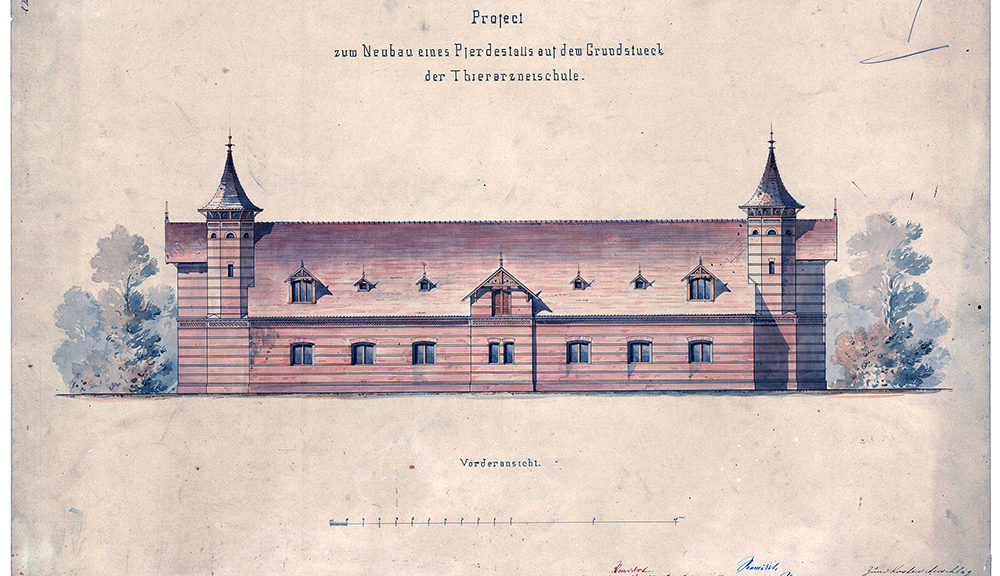
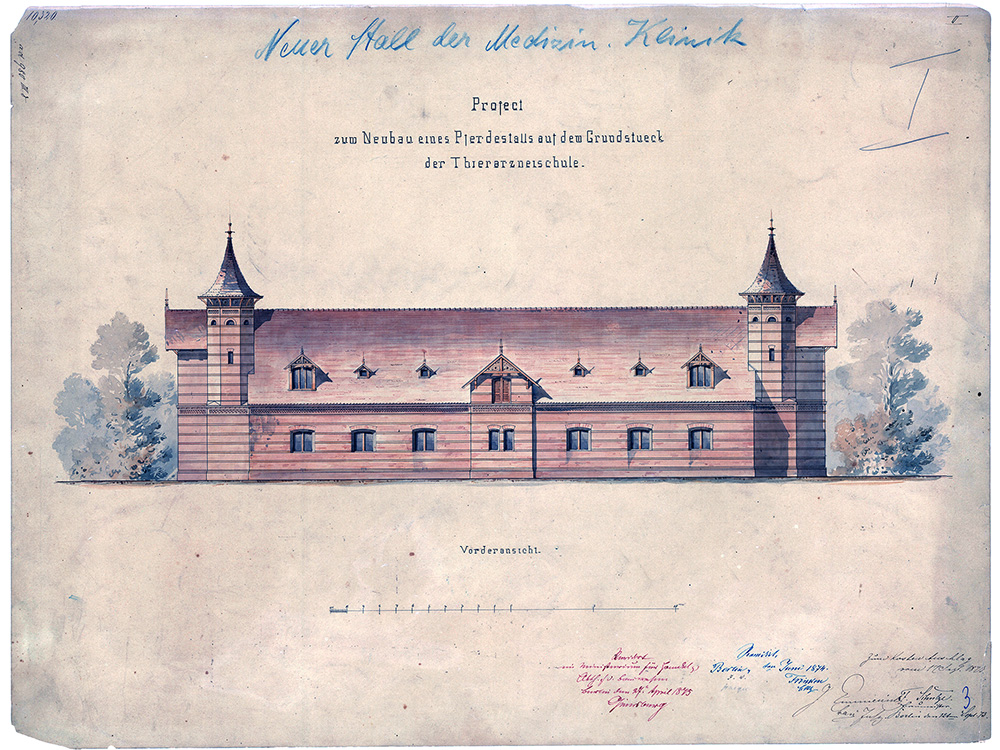
The drawing by the architect Julius Emmerich shows the front of an elongated single-storey stable building with a high roof, framed by stair towers and transoms on a scale of 1:100. The centre is emphasised by a risalit with a wood-decorated roof gable, and three window axes each on the left and right. On the ground floor, double-wing windows form a line with the skylights and thus vertically divide the cube. In the gable of the risalite, at the level of the attic, a double-leaf slatted door through which straw and hay could be stored in the attic. The towers served as access to the work and living rooms of the animal keepers in the transverse bays. The shape of the roof, the profiled beam heads and brackets, the accentuation of the cornices by moulded stones as well as the alternating coloured brick bands are depicted in great detail in the drawing. Emmerich’s design borrows from Schinkel’s designs for Prussian country house buildings. Trees and bushes frame the planned building and refer to the park character of the site.
project new horse stable
"Project for the construction of a new horse stable on the site of the Thierarzneischule", 59.8 cm x 45.4 cm, drawing, ink, wash on cardboard

The plan served as an appendix to the cost estimate for the building of 17 August 1873 and was submitted by Emmerich and countersigned by master builder F. Schulze on 12 September of the same year.
At that time, Emmerich was in the Prussian civil service and was in charge of the planning. On the basis of the other autographs, the remarks on the plan and the accompanying signatures, it is possible to trace the usual approval procedure for new buildings that was customary for the city of Berlin in the young Empire. Government building officer Ludwig Giersberg, an employee of the Ministry of Construction, Military, Trade and Finance, Department of Construction, confirmed the accuracy of the plan document. From 1866 onwards, Giersberg was entrusted in the Ministry with the preparation of expert opinions and the examination of building projects of outstanding importance in public construction. His signature under the plan, dated 27 April 1875, confirmed the planning for the new stables for the veterinary school. The text “Neuer Stall der Medizin. Klinik” using a blue pen probably goes back to the planning for necessary new buildings for the veterinary school at the beginning of 1908. At that time, 10,000 horses per year were already being treated in the existing buildings.

After the equine clinic was completed in 1839, the building was used as an animal stable and warehouse until the veterinarians moved to Dahlem in 1991. In 2014, extensive renovation and conversion work took place. Today, there are laboratory and seminar rooms on the ground floor and offices of the Institute of Biology on the upper floor.

Author: Kerstin Hinrichs, Technical Department

BMBF to fund a new Käte Hamburger Kolleg at the HU from 2024 onwards

“InHerit” – Heritage in Transformation

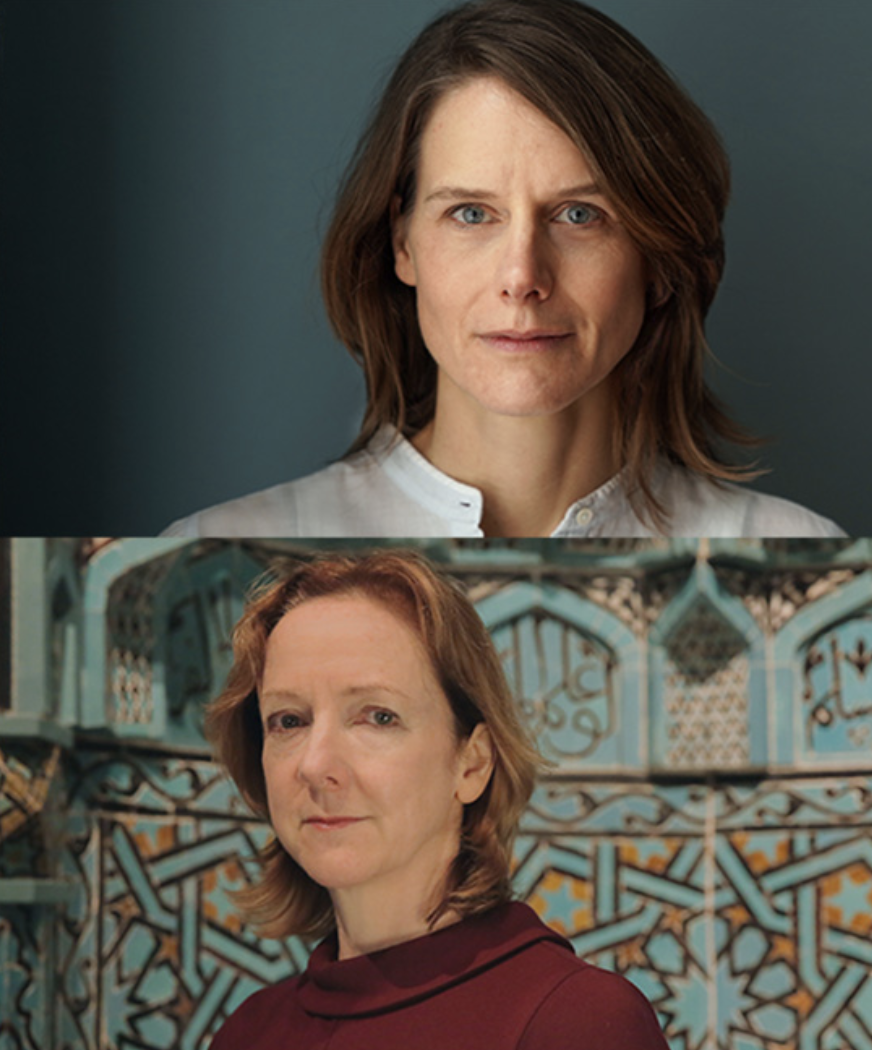
What shapes society? What constitutes identity or difference? How can we define belonging, ownership or the changing relationship between history, present and future? Funded by the Federal Ministry of Education and Research (BMBF) at the Humboldt-Universität zu Berlin (HU) from 2024, the Käte Hamburger Centre for Advanced Study “Heritage in Transformation” (InHerit) revolves around these central questions of our time. InHerit will be led by art historian Eva Ehninger and HZK director Sharon Macdonald.

Together with international fellows, heritage will be analyzed as a pluralizing, ongoing activity; heritage’s influence on changing social relations will be a key focus of examination; and the transformation and expansion of heritage itself, through innovative knowledge exchange formats, will be actively pursued. The resulting new form of heritage research positions the humanities at the centre of addressing fundamental global transformation processes, leading to the reshaping of the humanities’ own epistemological frames of reference.

InHerit’s core research themes are based on these paradigm shifts:
(1) the decentring of the West or Global North;
(2) the decentring of the human, and accompanying focus on connections to, and interdependencies with, nature; and
(3) the transformation of attributions of value, especially in relation to changes in reflections on the parameters of collecting.

InHerit’s emphatically transdisciplinary, practice-oriented approach, in which the humanities are central, will tackle urgent social, cultural, political and environmental challenges, and, thus, directly address the key idea of the BMBF programme “Understanding Society – Shaping the Future.”

About the Käte Hamburger Kolleg

Globalisation, law, religion, work or the environment – with the Käte Hamburger Kolleg, the BMBF offers outstanding scholars the freedom to conduct research on a broad spectrum of social issues in the humanities since 2008. As Centres for Advanced Study, the Käte Hamburger Kollegs give scholars in the humanities and social sciences the freedom to work on topics of their choice, free from many of the obligations of everyday academic life, together with fellows from all over the world who are invited to Germany for up to twelve months.

Further information

Read the BMBF announcement about the Käte Hamburger Kolleg (BMBF, 06.02.2023)
Read the HU announcement about the Käte Hamburger Kolleg (HU, 06.02.2023)
Report on the application process for the Käte Hamburger Kolleg (HU, 06.03.2023)

Contact

Eva Ehninger (eva.ehninger@hu-berlin.de)
Sharon Macdonald (sharon.macdonald@hu-berlin.de)

Copyright: Eva Ehninger: Liquid Blues Production/Boris Hars-Tschachotin; Sharon Macdonald: Alexander von Humboldt Stiftung/Sven Müller

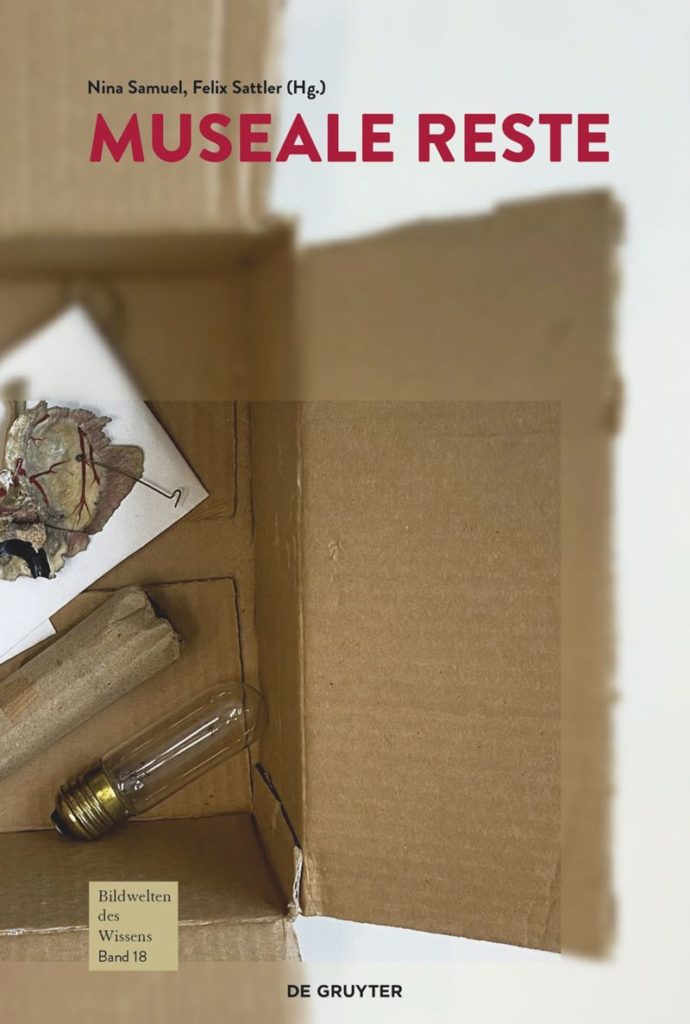
New volume in the series „Bildwelten des Wissens“

Bildwelten des Wissens – volume 18.
Museale Reste. 

Edited by Nina Samuel and Felix Sattler

Remnants are a challenge for the museum as an institution. They are ambiguous figures, and their attributions open up and thus contribute to transcending the taxonomic, disciplinary, architectural, and institutional boundaries of museums. They can be found everywhere—in exhibition spaces as well as storage depots, and in laboratories just as in the administration. In each of these contexts, there are respectively different forms of professional self-conception, knowledge, and practical handling that determine the status of remnants.

The volume contributes to specifying terms such as remnant, trash, traces, and boundaries more precisely within the context of the museum and to reassessing them for debates in conservation, curating, art history, and museum anthropology.

Available as Open Access publication (PDF)

Museale Reste Publikation

Object of the Month: Lise Meitner Monument by Anna Franziska Schwarzbach

Object of the Month 01/2023

Lise Meitner Monument

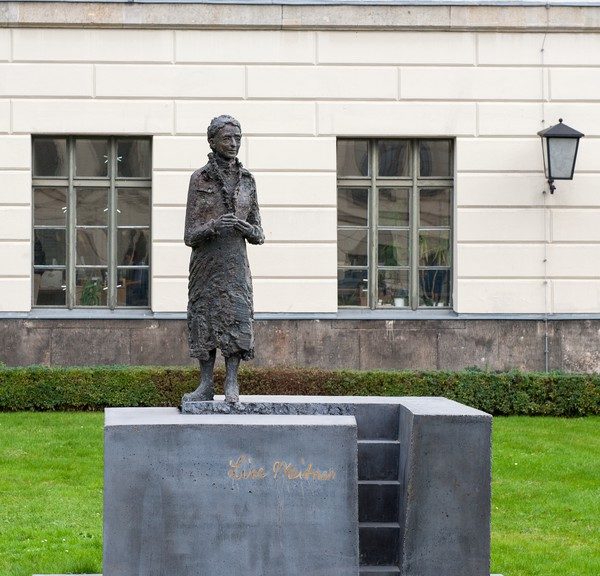
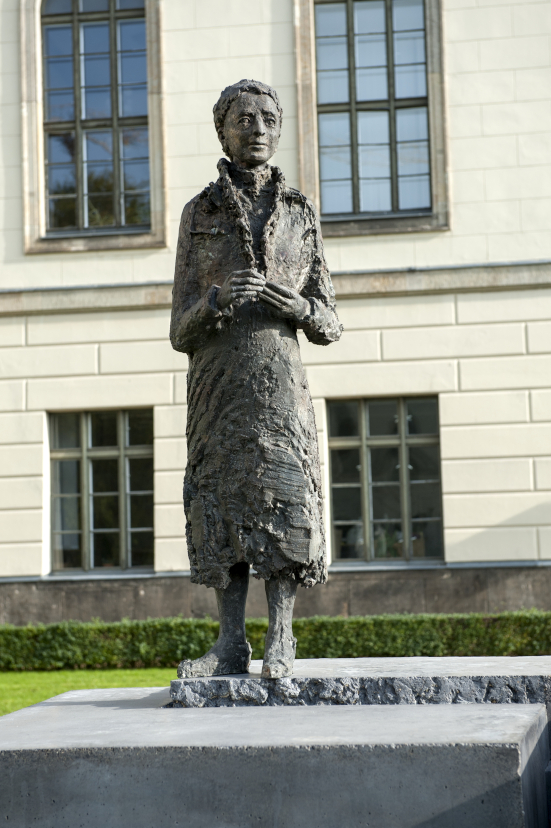
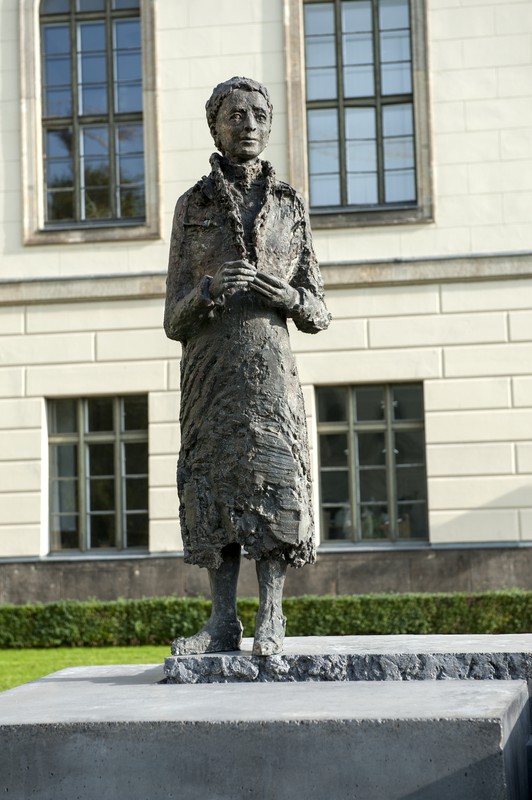
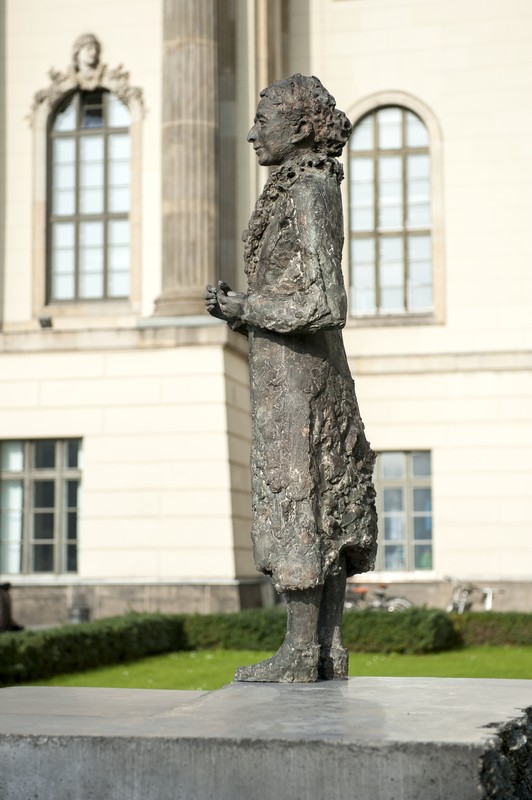
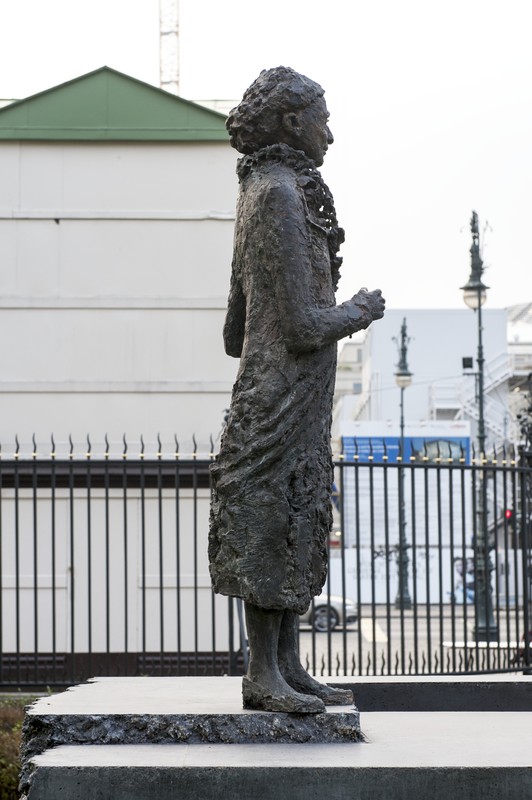
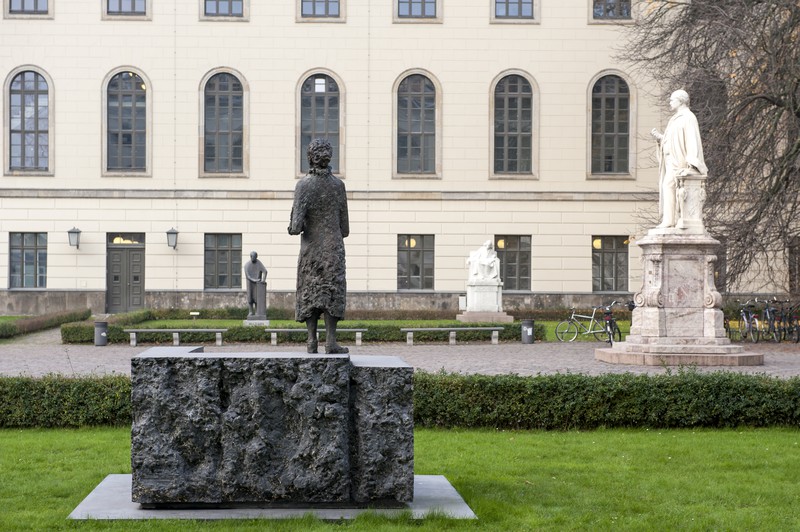
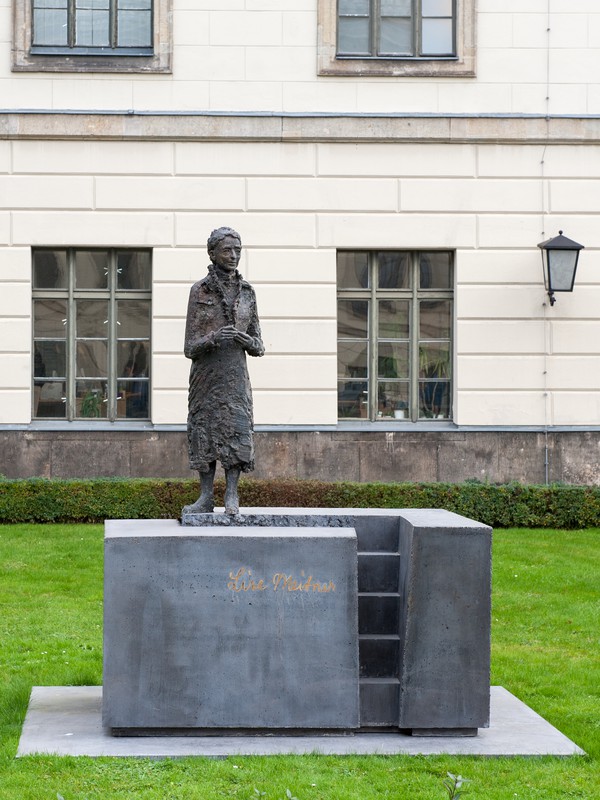
Since 2014, Lise Meitner faces Unter den Linden; on the other side of the cour d'honneur of the main building, Theodor Mommsen and Max Planck face her. The monument to Hermann von Helmholtz completes the historical series, which is broken up and continued both in terms of contemporary history and aesthetics by Lise Meitner's representation - no longer larger than life and in a space-consuming pose, but set back and asymmetrically on the plinth. The bronze monument to Lise Meitner (1878-1968) is the youngest in the university's cour d'honneur and the only one to date to honour a female scientist. Lise Meitner (1878-1968) combines many special features in her scientific biography: she was the second woman to receive a doctorate in physics from the University of Vienna in 1906; in 1913 she was the first woman to become a scientific member of the Kaiser Wilhelm Society; she was the first woman to work as an assistant to Max Planck; in 1922 she became the first female physicist in Prussia to habilitate at the University of Berlin; and finally, in 1926, she was appointed as the first associate professor for experimental nuclear physics. In retrospect, she herself describes the fact that she took her work with the students very seriously as "a great human responsibility for our young colleagues, with whom we are together all day and for whose overall human development everything we do and say can have an influence".

Lise Meitner Monument

Nuclear power for peaceful use

Even before her theoretical interpretation of nuclear fission in 1939, she received the first of a total of four nominations for the Nobel Prize in 1919 – but she did not receive the Nobel Prize itself. This honour was bestowed on Otto Hahn in 1945, with whom Lise Meitner worked and researched together for decades – and whom she sometimes referred to, self-confidently teasingly, as “chicken”. She became known to the scientific community early on and met Marie Curie and Albert Einstein personally. As a Jew, she was forced to give up her scientific work by the Nazi Law for the Restoration of the Professional Civil Service, which was passed in 1933. In 1938, she was able to emigrate to Sweden. There, from 1947 to 1960, she held a research professorship and was head of the nuclear physics department at the Stockholm Institute of Technology. From then on, she devoted herself not to the construction of the atomic bomb, but to the peaceful use of nuclear energy. After her retirement in 1960, she moved to Cambridge, where she died eight years later, having received many international honours and awards.

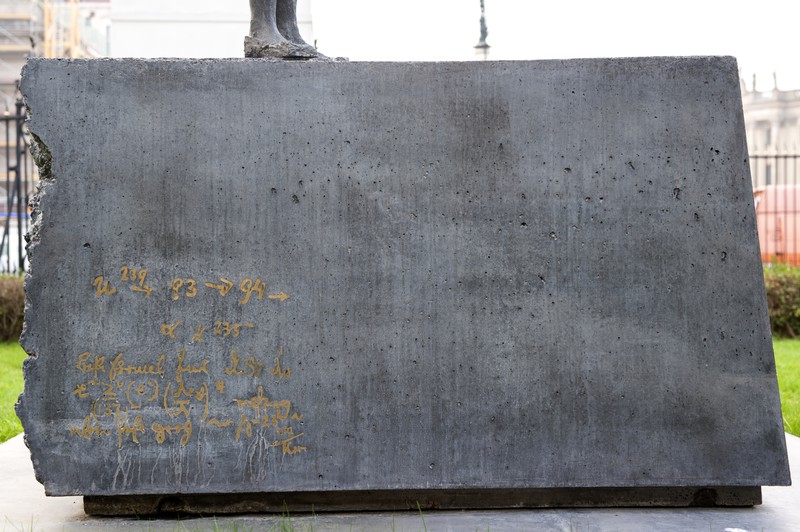
Monument with signature, nuclear reaction and calculation

The Berlin sculptor Anna Franziska Schwarzbach won the European art competition with her design for the Lise Meitner Monument. The site also almost occupies the place where the monument to Heinrich von Treitschke once stood – the historian who triggered the Berlin anti-Semitism controversy with his sentence “The Jews are our misfortune” and whose monument was finally removed after being moved by the National Socialists in 1951.
Lise_Meitner
Anna Franziska Schwarzbach
Schwarzbach contrasts the relationship between the figure and the plinth: on the base plate lies a plinth with various cuts and cracks that are associatively linked to the fractures in Meitner’s biography. The portrait-like figure itself stands somewhat apart, at once delicate and small and prominent, representing marginalisation as much as merit. On the front of the plinth is Lise Meitner’s signature, on the smooth left side surface a drawing of the nuclear reaction and fragments of a calculation. Thus the attributes have also migrated to the plinth and are not attached to the figure. Criticised as decorative, following female stereotypes and lacking the potential for irritation as an impulse to reflection, the monument is subordinate to the coherent appearance of the Court of Honour. On the everyday walk into the main building of the university, the Lise Meitner Monument nevertheless evokes German history, university and scientific history as well as questions of equal rights – whether it is an anachronism should be decided by each:r.

Author: Christina Kuhli, Custodian of the HU
Art Collection / Custody of the Humboldt University

Photos: Matthias Heyde

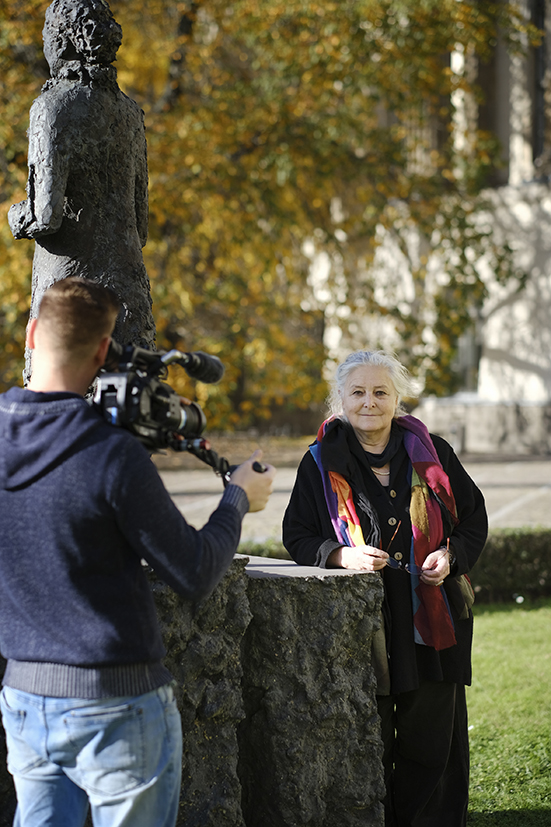
HZK-CARMAH Colloquium – The Phyletic Museum

What time: 06 February 2023, 2 p.m. right on time.
Where: The event will take place at the Helmholtz-Zentrum für Kulturtechnik (Haus 3, Gerlachbau next to the Tieranatomische Theater, Campus Nord, Philippstraße 13) and virtually (access data for the video conference will be provided on request by email to oliver.zauzig@hu-berlin.de).

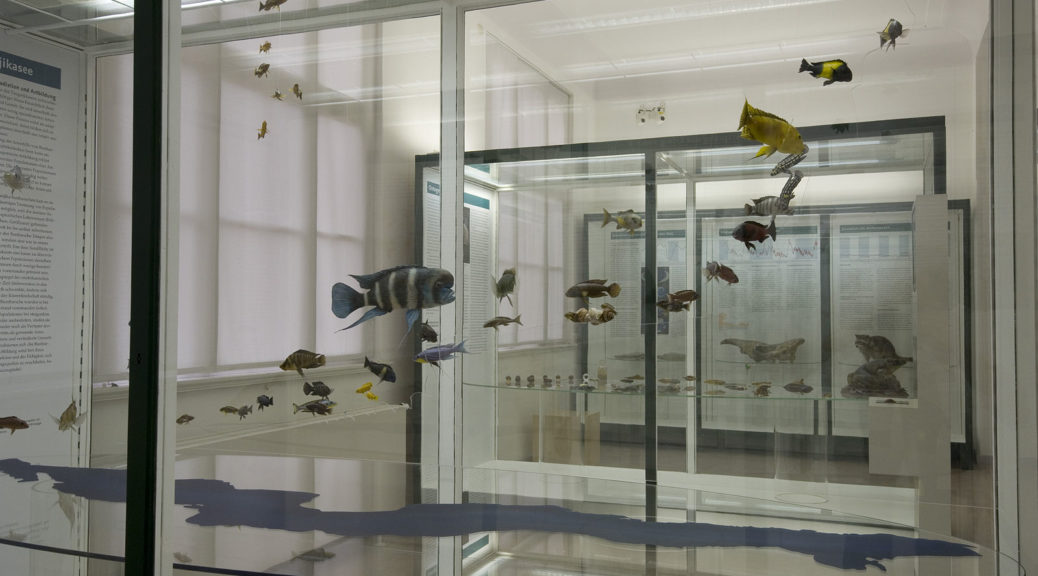
The Phyletic Museum in Jena was founded in 1907 by Ernst Haeckel, who made Charles Darwin’s theories known in Germany. The main theme of the museum is accordingly evolution. In the museum, living and dead animals are related to people of the past and present. The film project accompanies the work of the museum educator and shows her practices in dealing with objects, her interpretation of the (biological) world and the communication of biological knowledge to the public and the student body. The focus is on the history and use of the teaching collection of the Institute of Special Zoology at the University of Jena, which the museum houses – and the small and large irritations that its objects trigger in viewers.

Wolfram Höhne is an author and filmmaker. He works at the interface of art and cultural heritage research. He is currently the academic coordinator of the research training group “Identity and Heritage” at the Bauhaus University Weimar and the Technical University Berlin.

Larissa Förster is a cultural anthropologist working on the (colonial) history of museum and university collections, provenance and restitution research, and questions of postcolonial memory culture. She is an associate member of CARMAH. Together with the historian Holger Stoecker, she wrote the book “Haut, Haar und Knochen. Koloniale Spuren in naturkundlichen Sammlungen der Universität Jena” [engl. transl. “Skin, hair and bones. Colonial Traces in Natural History Collections at the University of Jena”] (2016).

Michael Markert is a historian of science and works on natural science teaching collections and their objects – zoological wall charts, anatomical models, physical apparatus – as well as related topics such as collection ethics and digitisation. He is currently a project manager developing workflows for enriching museum metadata at the Thuringian University and State Library.

The film and lecture are in German.